
How I Carve Stone for Jewelry: A Sculptor's Process
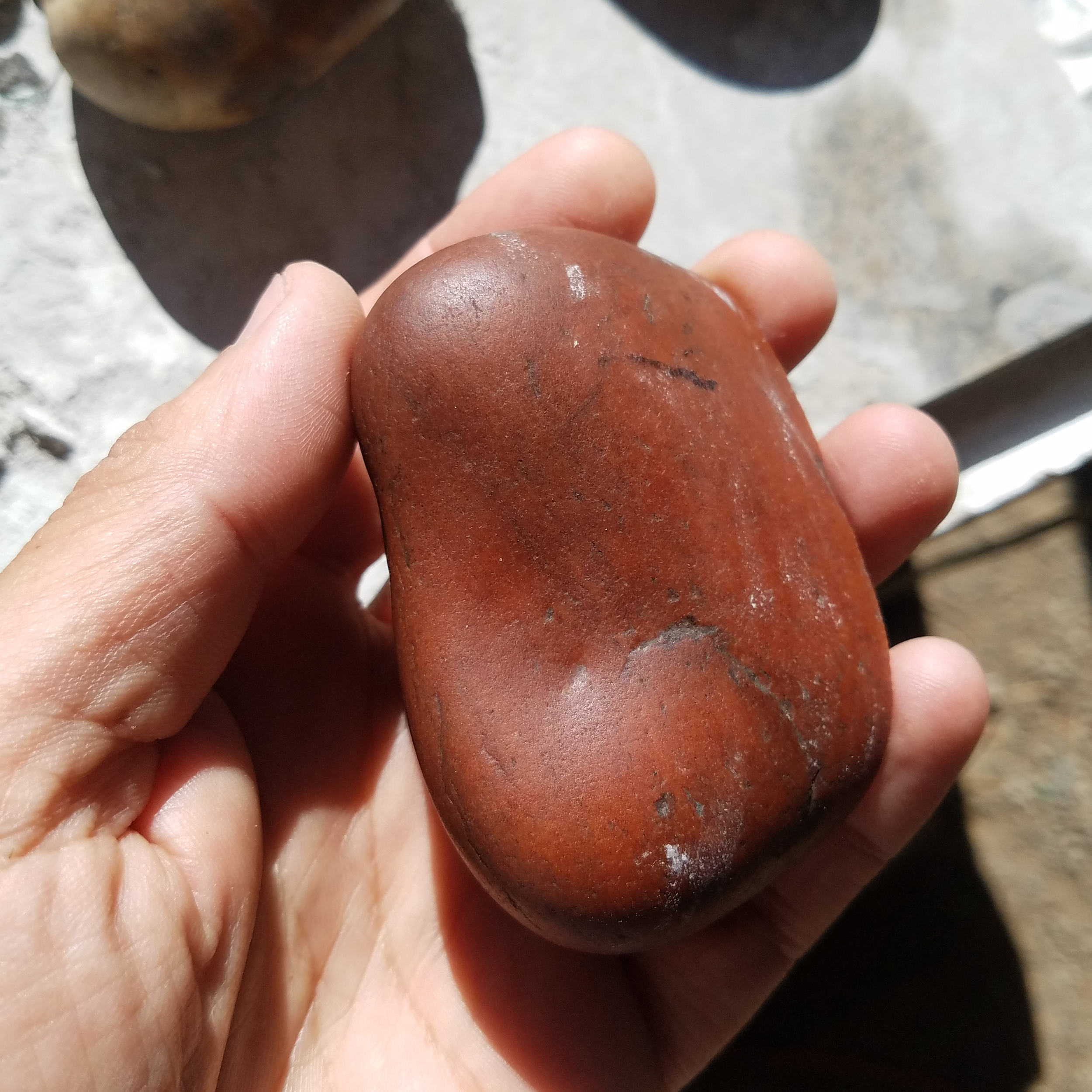
Carving stone for jewelry is a subtractive sculptural process: I start with a raw piece of agate or other hard stone, after slicing it into a slab, I draw a design on its surface. Using diamond burs with water I slowly remove everything that isn't the design. A single carved stone piece can take anywhere from a few hours to several days of carving, depending on the complexity and the stone's hardness. After the carving is finished and polished, I fabricate a setting around it in recycled sterling silver or gold.
I've been a studio jeweler for thirty years, and I still consider myself a sculptor first. The body is part of the medium. Here's how a piece of FoundWear jewelry actually comes into being, from the riverbank to the finished work.
Step 1: Finding the Stone
When I'm hunting for stone to carve, three things matter: density, hardness, and color all the way through. A stone that looks beautiful on the outside can be dull or cracked inside, so I'm always reading the surface for clues about what's underneath. I find a lot of my material on hikes in the Klickitat River Valley in Washington, where I live and work. The biodiversity and rustic landscape here has inspired my work for three decades. I also source raw stone from small suppliers when I want a color I can't find locally.
Agate is my most-used stone. It's hard enough to hold fine detail, takes a high polish, and comes in colors from milky white to deep red to banded blue.
Step 2: Revealing What's Inside
Once I've collected stones, I bring them to my saw and slice them open. This is one of the most uncertain moments in the process — a stone I was excited about might be hollow or fractured inside, and a plain-looking one might reveal a stunning interior pattern. I cut several slices from each stone to see what I'm working with before I commit to a design.
Step 3: Designing on the Stone
I hand-draw the design directly onto the polished slice of stone, usually a flower, leaf, animal, or natural motif. The drawing acts as a roadmap. I let the stone's natural color and pattern influence the design — a band of darker agate might become the center of a flower, or a swirl in the stone might suggest the curve of a leaf.
Step 4: Carving with Diamond Burs
This is the longest part of the process. Using diamond-tipped burs and a constant stream of water (the water keeps the bur cool and washes away stone dust, which would otherwise be hazardous to breathe), I remove material in layers. Coarse burs first, to take down the bulk of the stone that isn't the design. Then progressively finer burs to refine shape and add detail.
The principle is simple: everything that isn't the flower has to go. The execution takes patience. Stone is unforgiving — you can't put material back once you've removed it.
Step 5: Polishing
After carving, I polish the piece with progressively finer abrasive compounds until the surface has the depth I want. Some pieces I polish to a high gloss; others I leave with a more matte, ancient-looking finish to match the feeling I want the piece to have. My best work, to me, looks like it could have been pulled from the ground in a lost civilization.
Step 6: Silversmithing the Setting
Once the carved stone is ready, I fabricate a setting around it in recycled sterling silver or gold. I melt and roll my own sheet and wire from 100% of my casting scrap — nothing gets thrown out. The setting is designed specifically for that one stone, so no two FoundWear pieces are quite alike.
Step 7: Finishing
I often patina the silver with chemicals that darken the recessed areas, then polish back the high points. This brings out the handworked detail in the metal and gives the piece the slightly weathered look that has become a signature of FoundWear. Then it's ready to be worn.
Frequently Asked Questions
How long does it take to carve a stone for jewelry? A simple carved stone piece takes a few hours of carving time. A complex piece with fine detail can take several days, plus the additional time to fabricate the setting. The full process from finding the stone to a finished piece of jewelry usually spans one to three weeks.
What stones can be carved for jewelry? The best stones for jewelry carving are dense, hard, and have consistent color throughout. Agate, jasper, chalcedony, jade, lapis lazuli, and turquoise are common choices. The stone needs to be hard enough to hold detail (around 6.5+ on the Mohs scale) Diamond is a 10.
Is hand-carved stone jewelry better than machine-cut? Hand-carved stone jewelry is one-of-a-kind by nature. Each piece is shaped to the stone in front of the carver, rather than being cut to a standard pattern. Machine-cut stones are uniform and faster to produce, which makes them better for matched sets and mass production. Hand-carved pieces tend to have more depth, asymmetry, and character.
How do I care for hand-carved stone jewelry? Hand-carved stone is durable but not indestructible. Avoid hitting the stone against hard surfaces, remove pieces before swimming in chlorinated water, and clean with a soft cloth and mild soap. Store each piece separately so harder stones don't scratch softer ones.
Is recycled silver real silver? Yes. Recycled sterling silver is chemically identical to newly mined silver — it's the same metal, just sourced from previously refined material rather than newly mined ore. Recycled silver dramatically reduces the environmental impact of jewelry making without compromising quality.
FoundWear is an ethical art jewelry collection by Scott MacDonald, based in the Klickitat River Valley, Washington. Each piece is hand-carved and set in recycled precious metal in his studio.